Residential Developments Based In Shropshire
Residential Developments Experts
Whitchurch-based architectural designers delivering new build, residential, extension projects and more. Strong understanding of planning applications, backed by over 25 years’ experience across Shropshire, Cheshire and beyond.
ARH Architectural Design
What Are Residential Developments Services & How Do They Work?
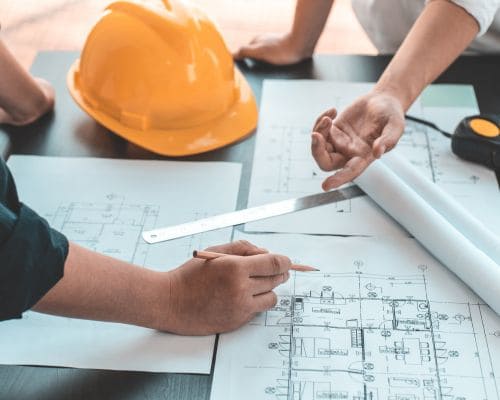
Residential development design deals with turning a piece of land into a workable housing scheme that planners will approve and builders can deliver without constant changes. The difficulty is rarely the idea of building multiple homes—it’s making everything fit: site constraints, access, drainage, density, and planning policy.
A common example is a landowner looking to develop a small parcel into 4–6 houses. Initial sketches often push too many units onto the site or ignore access widths and turning areas. This leads to objections from highways or planning officers, and the scheme stalls.
At ARH Architectural Design, the work focuses on resolving these issues early. Layouts are developed with clear consideration for spacing, orientation, parking, and infrastructure, so the scheme stands up under planning review. With over 25 years working across planning, technical design, and construction constraints, the designs reflect how developments are actually assessed and built. This approach avoids repeated redesign and keeps the project moving through each stage.
ARH Architectural Design
When Do You Need Residential Developments Services?
Most development projects run into trouble before a formal application is even submitted. Early assumptions about how many units will fit or how access will work often don’t hold up once measured against planning policy and site realities.
A typical situation involves a developer purchasing land based on rough capacity estimates. Once detailed drawings are prepared, issues appear—insufficient visibility for access, poor drainage strategy, or layouts that conflict with neighbouring properties. At that stage, changes affect the entire scheme.
Delays and extra costs usually follow when multiple consultants work from incomplete or inconsistent information. Planning refusals, redesign fees, and extended holding costs on the land all add up.
These are the kinds of situations that signal the need for proper development design input:
Site layout shows houses cramped with inadequate access roads
Planning feedback highlights overlooking or spacing compliance issues
Drainage or levels not addressed in early design drawings
Unit numbers reduced after initial planning discussions with council
ARH Architectural Design
What Happens During Residential Developments Services & What To Expect?
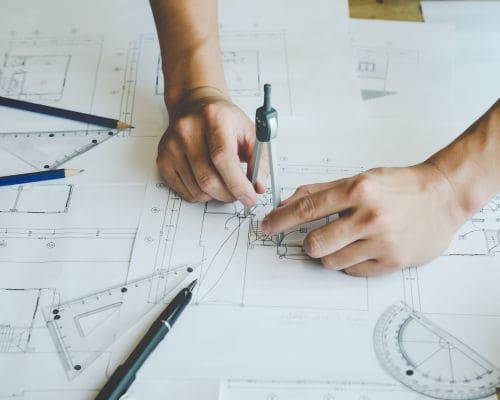
The process starts with a full review of the site—measured surveys, access points, surrounding properties, and any planning history. From this, a realistic capacity is established based on planning policy and physical constraints.
Initial layout options are then prepared, showing how the development can function on the ground. This includes road positioning, parking arrangements, garden sizes, and how each unit relates to the others. These layouts are refined through practical considerations, not just visual arrangement.
Once a preferred scheme is agreed, detailed planning drawings are produced. These are structured to address common planning concerns such as overlooking distances, road access, and site levels. Feedback from planning officers is incorporated directly into revisions without reworking the entire scheme.
After planning approval, technical drawings are developed to define construction details—foundations, drainage runs, and structural coordination. Builders and engineers work from the same information, reducing uncertainty during construction.
The difference shows during the build phase: fewer design queries, consistent site progress, and controlled costs. The scheme translates from drawings to completed units without repeated changes or delays. Each stage is handled with a clear path forward, so the development progresses as planned.
TESTIMONIALS
What Our Residential Developments Customers Say About Us
The Process
3 Step Process For Your Residential Developments Needs

Initial Consultation
Begin by completing our enquiry form to outline your project. During the initial consultation, we focus on Residential Developments, assessing feasibility, planning constraints and practical considerations before advising on next steps.

Design & Planning
We develop your concept design and prepare drawings for planning and building regulations approval, with particular attention to Residential Developments. We coordinate with local authorities and consultants to ensure a clear, compliant submission.

Technical Delivery
Once approved, we produce detailed technical drawings and coordinate with our structural engineer partners and contractors to ensure your project progresses efficiently from paper to construction.
Request A Residential Developments Consultation
BOOK A CONSULTATION

206 Liverpool Rd, Whitchurch SY13 1UT
BUSINESS
SERVICES
SERVICE AREAS
OPERATING HOURS
Sun: Closed
Mon: 9:00am - 5:00pm
Tue: 9:00am - 5:00pm
Wed: 9:00am - 5:00pm
Thu: 9:00am - 5:00pm
Fri: 9:00am - 4:00pm
Sat: Closed